Modern military operations require headquarters to operate wherever the mission demands. Command and control capabilities need to move with the force, deploy rapidly and provide personnel with an effective working environment from the moment operations begin.
This requirement formed the starting point for the development of the new mobile command post capability for 1 German-Netherlands Corps. Working closely with 1GNC and the Materiel and Logistics Command, Expandable translated operational requirements into a deployable workspace designed around the people who use it. The result is a mobile solution that combines transportability, rapid deployment and a highly functional interior within a single platform.
Developed around the operational requirement
The project did not start with an existing product. It started with an operational need.
Through close cooperation with military experts, requirements were translated into concepts and subsequently into a prototype. This created the opportunity to test the solution in practice, gather feedback from users and continue refining the design.
Rather than treating the trailer simply as a means of creating additional floor space, the development process focused on its actual role within a deployable headquarters: providing personnel with a reliable environment for command, control, coordination, planning and briefing. Each stage provided new insights into how the platform would be transported, deployed and used in the field. Those lessons were incorporated into the next iteration. That iterative approach ultimately transformed the initial requirement into a deployable capability ready for operational use.
Mobility without sacrificing workspace
One of the fundamental challenges of a mobile headquarters is the balance between mobility and usable workspace.During transport, dimensions need to remain manageable and road-compliant. Once deployed, however, personnel require sufficient space to work effectively for extended periods.
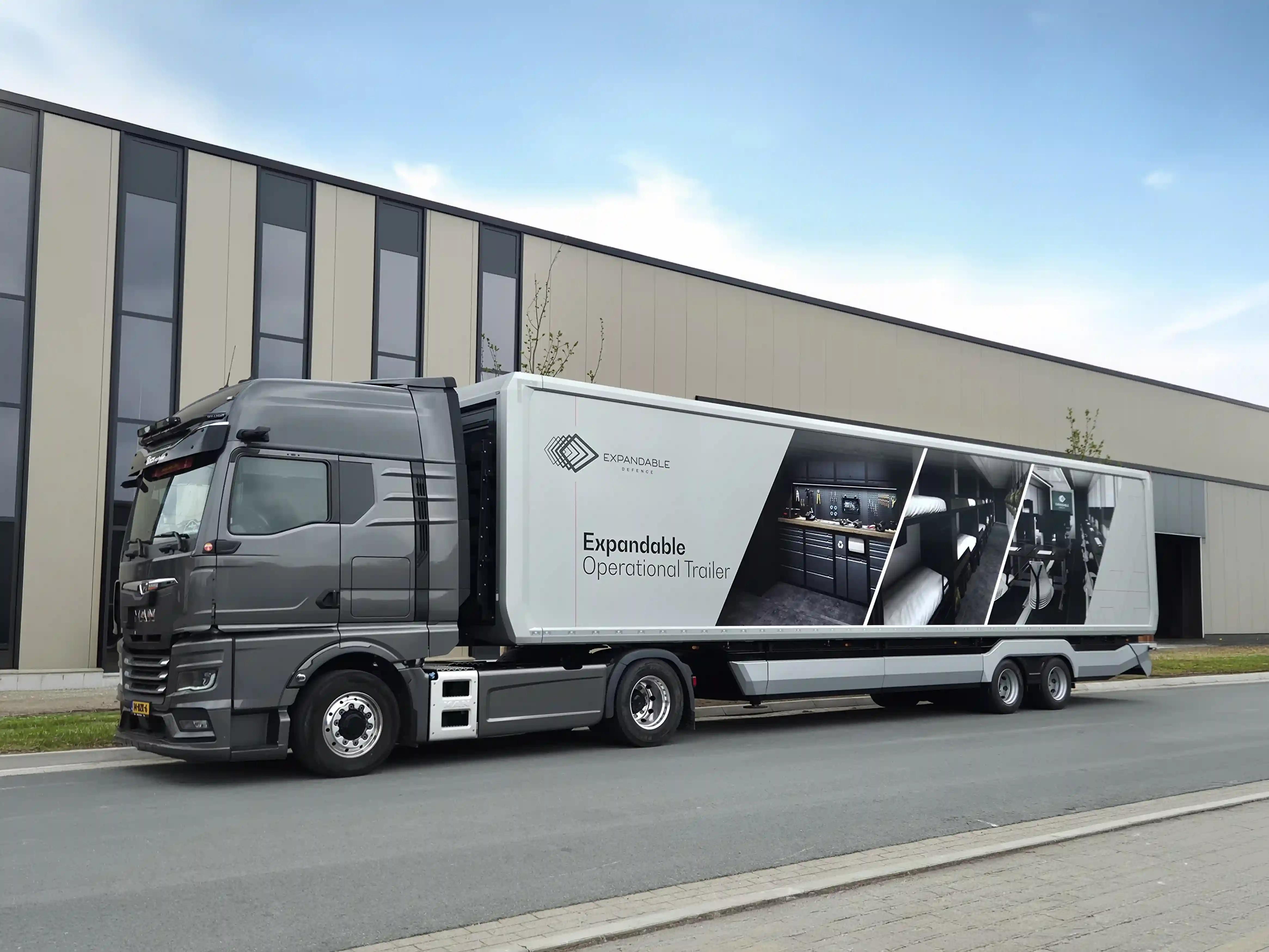
The Expandable platform addresses both requirements within the same unit. In transport configuration, the trailer maintains a compact footprint for relocation. At the deployment location, the expandable structure significantly increases the available interior space.
An advanced hydraulic system supports rapid deployment, allowing an Expandable Trailer to transition from transport to operational configuration in approximately 15 minutes. An integrated automatic levelling system stabilises the platform during deployment, including when operating on uneven terrain. This means that valuable time at a new location can be spent establishing the mission rather than constructing the infrastructure around it.
A workspace designed for command and control
A command post is ultimately a working environment. Its effectiveness depends not only on how quickly it can be transported and deployed, but also on how well it supports the people operating inside it.
The Expandable Mobile Command Post platform has therefore been developed around a modular interior architecture. Depending on mission requirements and configuration, a unit can support up to 40 fully equipped workstations and can be configured for command-and-control activities, briefings, planning or training.
Integrated infrastructure supports power distribution and fibre-optic networks, while layouts and equipment can be adapted to specific operational requirements. The objective is straightforward: create an environment in which personnel can arrive, deploy and get to work quickly.
Built for sustained field operations
Rapid deployment is only the beginning. Once established, a command post may need to remain operational for extended periods.
For that reason, the Mobile Command Post platform can integrate systems that support greater operational autonomy. A high-capacity battery system enables silent operation during critical phases and provides continuity in the event of external power loss. For longer deployments, an integrated generator can provide additional off-grid capability. Climate control and heat-recovery ventilation help maintain a controlled working environment and continuous fresh-air exchange during prolonged, high-tempo operations. Together, these systems are designed to support the people inside the command post and allow the platform to remain operational in demanding field conditions.
From prototype to operational capability
The official handover marks more than the delivery of new equipment.
It represents the completion of a development process in which an operational requirement was progressively transformed into a physical, deployable solution. For Expandable Defence, projects like this demonstrate the value of developing directly alongside the end user. Military expertise defines what the capability must achieve in the field. Engineering and manufacturing expertise translate those requirements into a platform that can be produced, deployed and operated in practice. The result is not simply a trailer. It is infrastructure designed to move with the mission.
Ready where and when it is needed
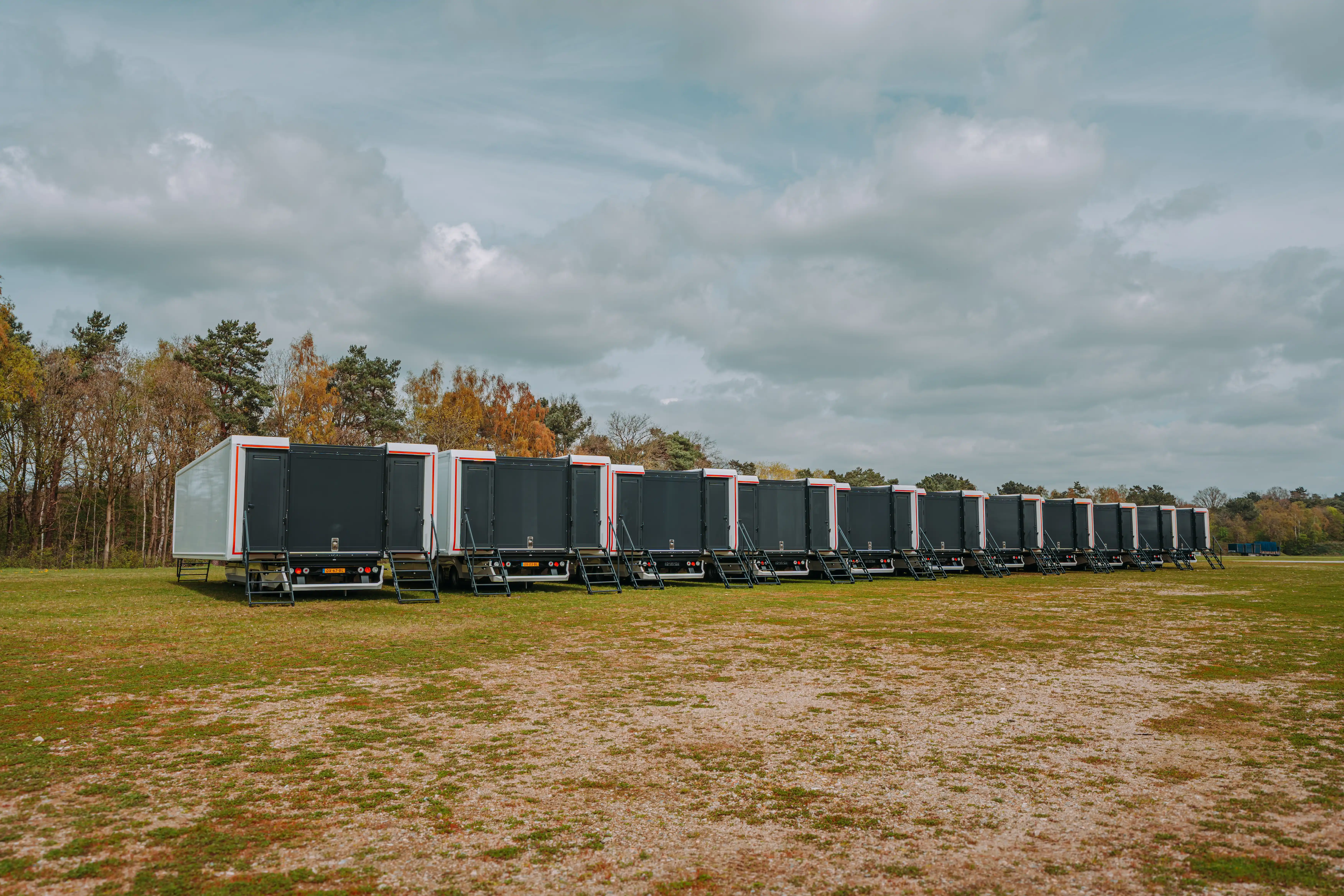
The operational environment continues to demand greater mobility, flexibility and readiness from military organisations. The infrastructure supporting those organisations must be able to do the same. With the official handover to 1 German-Netherlands Corps, the Command Post Trailers move from development and production into their next phase: operational use.
For everyone at Expandable Defence involved in the project, seeing the units reach this point represents an important milestone. And, more importantly, it demonstrates what can be achieved when operational experience, end-user feedback and engineering development come together around one objective: creating deployable capability where and when it is needed.